The project
The proposed development would include the construction, operation, maintenance and decommissioning of a grid connected solar farm facility.
Located between Newport, Ponthir and Caerleon, the site would have the capacity to generate up to 46 MW of electricity, enough to power the equivalent of up to 17,265 typical family homes per year (statista.com), and saving up to 495 tonnes CO₂e (assuming UK CO2 emissions factor from grid is 0.124 kg CO₂e/kWh) per year (carbonbrief.org).
TotalEnergies is working in partnership with Dŵr Cymru Welsh Water to decarbonise its operations. Dŵr Cymru Welsh Water will purchase and consume 100% of the energy generated by Candwr Solar Farm, a proportion will be consumed directly at Court Farm Treatment Works, with the rest of the generated energy ‘sleeved’ to other Dŵr Cymru Welsh Water sites around Wales via the National Grid.
Reducing Dŵr Cymru Welsh Water’s reliance on the National Grid also gives more control over operational costs. This would protect from fluctuating energy prices and helps manage customer bills at a time of rising costs thereby generating additional local benefits.
Dŵr Cymru Welsh Water has committed to 90% carbon emission reduction by 2030 and ‘Net-Zero’ by 2040. This project would make a valuable contribution towards meeting these targets.

There are several factors that influence the location of a solar farm.
Future Wales: The National Plan 2024 sets the key factors influencing site selection and design for large scale solar development in the context of the Well-being of Future Generations (Wales) Act 2015. These factors include land features, grid connection and minimising the disruption to the local area.
There are limited locations within Wales that can satisfy all characteristics, and therefore solar developments are proposed at locations which have a blend of the required characteristics.
The proposed development will have a limited environmental impact and can be connected to the electricity grid via a point of connection at the Court Farm Treatment Works. Obtaining voluntary land agreements for the main solar site is also a key influencing factor for the siting of the proposed development.
The suitability of the site is a factor that will be considered as part of the application process.
Panel technology is rapidly evolving and therefore procurement decisions and final specification of individual elements are typically taken following receiving consent.
Candwr Solar Farm is temporary and will be decommissioned and returned to full agricultural land once it’s come to the end of its useful life, in 40 years from first export of electricity.
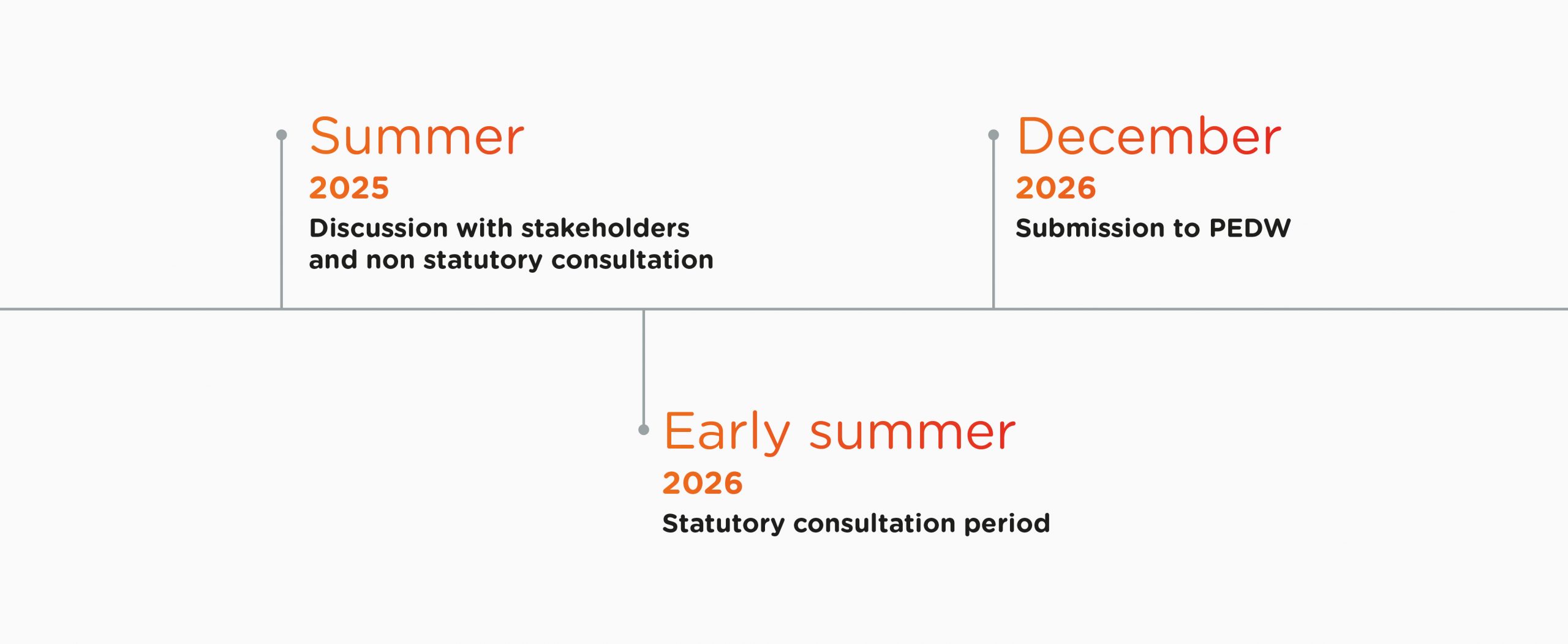
The project team are working hard behind the scenes to pull together detailed plans. These will be presented at the statutory consultation due to be held in early summer 2026.
Following the non-statutory, early consultation on our emerging plans held in summer 2025, we will be undertaking further consultation on our detailed plans in early summer 2026.
During the statutory consultation, required as part of the DNS process, we will present our full draft planning application to enable communities to have full details of the project and provide further feedback on the plans.
The project will include a cable route that will connect into a new substation to be built within the Court Farm Water Treatment Works.
A new substation will be built and will be situated within the existing Dŵr Cymru Welsh Water Court Farm Treatment Works.
Next steps
Indicative site layout plan
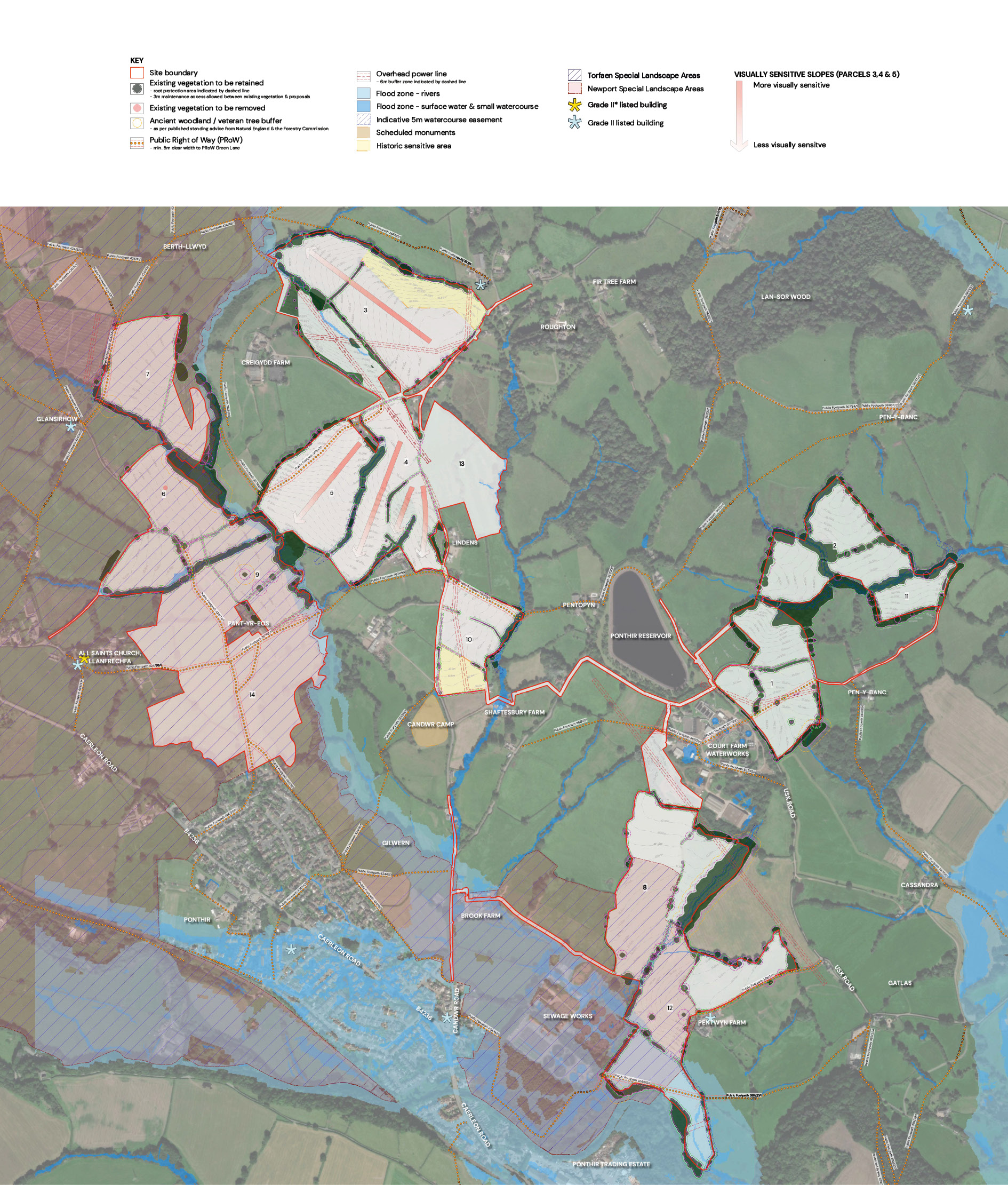
Our indicative site layout shows our plans for Candwr Solar Farm. It shows where the solar panels and key infrastructure could be located within the project boundary, as well as land we anticipate using for biodiversity and other environmental enhancement measures. The site has been designed to minimise impacts on existing heritage sites, trees, hedges, woodlands, and Public Rights of Way (PRoW).

Site Location